
How to Convert a Novel Chapter into a Screenplay and Keep Key Dialogue
Adapt a novel chapter into screenplay scenes while preserving key dialogue, character choices, and reveals. Includes examples and focused revision prompts.
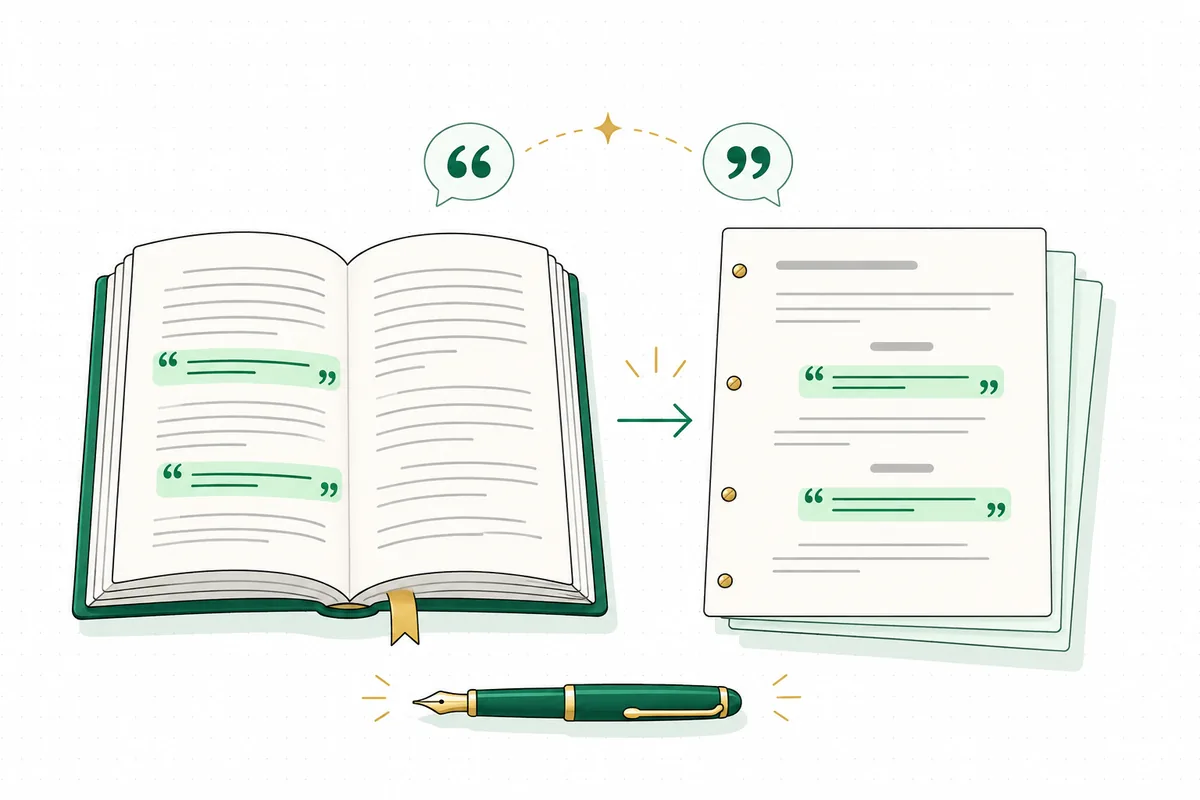
To convert a novel chapter into a screenplay while protecting its key dialogue, first identify what the scene must accomplish. Mark the lines that need to stay exact, separate them from exchanges that can be shortened, and track what each character knows. Then adapt the chapter into scenes and compare the draft with those decisions.
A script can contain your character names and still lose the confrontation that made the chapter work. It can also copy every sentence while leaving essential meaning available only in narration.
Open the NovelToScreenplay converter when you have a clean chapter file and specific priorities to check.
Free opening preview. Sign in to export; full adaptation requires a paid pack.
Decide what keeping the dialogue means
Preserving dialogue can mean two different things: keeping particular words unchanged, or keeping the purpose of a conversation. Decide which applies before you assess a draft.
A sentence may need to remain verbatim because it establishes a clue, returns later with a different meaning, or expresses a character's distinctive voice. Write down the exact wording, who says it, and where it belongs.
Other exchanges may matter because of their effect. A long conversation might establish that a brother refuses to help until his sister admits she lied. The adaptation needs that refusal, pressure and admission. It may not need every repeated question.
Use three categories:
| Decision | What belongs here | What to check |
|---|---|---|
| Keep verbatim | A clue, promise, callback or defining line | Wording, speaker and position in the scene |
| Preserve the meaning | An argument, negotiation or change of allegiance | The pressure and resulting choice still happen |
| Open to compression | Greetings, repeated explanations or information already visible | Cutting it does not remove a necessary setup |
A short, specific list helps you notice consequential changes. If the assignment requires every spoken line, request that and compare every exchange afterwards.
Prepare one chapter and a separate scene plan
Copy the chosen chapter into its own document, keeping paragraph breaks and dialogue punctuation clear. Preserve the original manuscript separately. If the chapter contains several locations or time jumps, keep those breaks visible.
Keep a separate planning sheet for review. You do not need to insert these instructions into the story itself.
For each scene, record the character's immediate goal, the resistance, and the change by the end. Include facts from earlier chapters that affect this scene, but distinguish them from information that must remain hidden.
Here is an example for an invented chapter:
| Scene element | Decision |
|---|---|
| Setting | A museum archive at night |
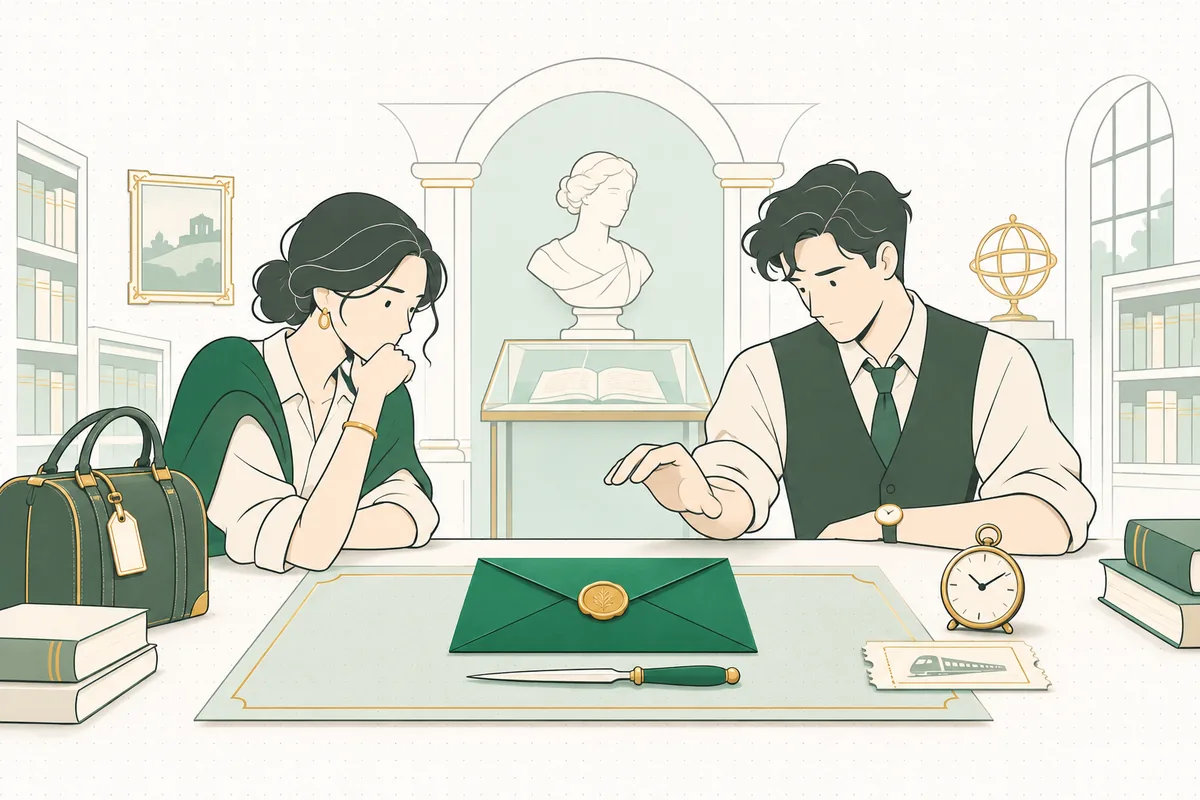
| Immediate goal | Nora wants to open her missing father's letter before leaving town |
| Resistance | Eli helped her reach it but now hesitates to let her read it |
| Deadline | Her train leaves at midnight |
| Key line from Nora | You promised me the truth, not another deadline. |
| Key line from Eli | Then stop asking me to make it safe. |
| Ending turn | Nora breaks the seal and commits to finding out |
| Reveal to protect | Neither the audience nor Nora learns the letter's contents yet |
Turn the emotional meaning into something playable
An adaptation needs to communicate information to an audience that cannot read the novel's narration. Ask what a performer could do, what another character could resist, or what an object could reveal.
Consider this original prose example:
At eleven forty-five, the last train was fifteen minutes away. Nora's midnight ticket lay beneath the lamp, her packed bag beside the archive door. Eli had brought the key, but now his hand covered the envelope. Her father's handwriting showed beneath his fingers. Nora had spent a year accepting Eli's promises. She could not leave with another one.
“You promised me the truth, not another deadline.”
Eli looked at her bag. “Then stop asking me to make it safe.”
She reached for the letter opener. Whatever the letter said, she would read it here.
One possible adaptation is:
INT. MUSEUM ARCHIVE - NIGHT

A desk clock reads 11:45. Beside it, a train ticket: DEPARTURE 00:00.

Eli's hand covers an envelope. Nora's packed bag waits beside the door.

NORA
You promised me the truth, not another deadline.

Eli glances at the bag. He takes his hand off the envelope.

ELI
Then stop asking me to make it safe.

Nora moves the bag away from the door.

She slides a letter opener beneath the flap.

The seal parts.
In this original illustration, both selected lines remain unchanged. Moving the bag suggests Nora has stopped preparing to leave. The scene ends before the letter reveals anything.
The gesture is a creative choice. Choose another if it better fits your character; give the audience a way to follow the decision.
Voiceover remains an option when narration is part of the intended experience. It should be a deliberate choice. In her Scriptnotes conversation about adapting her own novel, Taffy Brodesser-Akner describes revising her use of voiceover as she learned what performances and scenes could carry. You can make the same scene-level assessment: what does hearing this thought add?
Generate an opening and assess the approach
Upload your chapter document through NovelToScreenplay. The current workspace accepts a single text-based PDF, DOCX or TXT file up to 100 MB. Extract the chapter yourself; uploading a whole novel is not the same as selecting one chapter.
The free conversion covers an opening excerpt, so do not assume it includes your entire chapter. Inspect the preview first. Sign-in is required to export the opening. Full conversion with AI revisions currently starts at $29.90 for one complete adaptation and 20 chapter revisions; check the displayed offer before purchasing.
Keep your planning sheet beside the preview. Compare the first confrontation, the speakers and the information revealed. If the opening only restates what happened, you have identified a useful revision target before continuing.
After generating a chapter, use the chapter revision request to ask for a focused change. Adapt the starter requests below to your source.
Check whether the scene still works
Read the adapted scene without looking at the prose first. Can you tell who wants what, what prevents them from getting it, and what changes? Then compare it with the source.
A shorter draft may replace a page of explanation with an effective action. Check whether it also removes a necessary conflict, evidence or decision.
Check five things:
-
Important lines. Find each verbatim line and check the speaker. A preserved sentence can mean something different when another character says it.
-
Causality. Make sure the action follows the event that motivates it. Nora should decide to open the letter during the confrontation, rather than arrive already knowing its contents.
-
Knowledge. Separate what the author knows, what the audience knows and what each character knows.
-
Scene turns. Check that the exchange changes a choice, relationship or available course of action.
-
Added material. Examine new dialogue, explanations and actions. Keep additions that serve your adaptation; revise those that contradict the source.
For mystery, thriller and suspense chapters, add a reveal column to your notes. Record where a fact is introduced, who learns it, and what they can reasonably do next. An elegant line that reveals the culprit early is still a continuity problem.
Request a precise chapter revision
A useful revision request names the scene, restates the essential context and identifies what must change. “Make it more faithful” leaves the important decisions unspecified.
Adapt these starter revision requests to the scene you are reviewing.
Restore key dialogue and the scene turn
Revise the museum archive scene between Nora and Eli. It takes place at 11:45 p.m.; Nora's train leaves at midnight. Nora wants to open her missing father's letter before leaving town. Eli brought the archive key but hesitates to let her read the letter.

Keep these lines verbatim, with these speakers:
NORA: "You promised me the truth, not another deadline."
ELI: "Then stop asking me to make it safe."

Preserve the confrontation and Nora's choice to break the seal. Show the exchange as a scene, not a summary of their argument. Other dialogue may be shortened if its meaning remains.

Neither Nora nor the audience knows the letter's contents yet. Do not reveal them, invent their contents, or imply Eli has read the letter. End when the seal parts. Keep the location, deadline and character names unchanged.
Replace explanatory narration while protecting the reveal
Revise the museum archive scene between Nora and Eli at 11:45 p.m., fifteen minutes before Nora's train leaves. Eli brought the key. His hand covers her missing father's sealed letter, and Nora's packed bag is beside the door.

Keep Nora's line exactly: "You promised me the truth, not another deadline."
Keep Eli's line exactly: "Then stop asking me to make it safe."

Remove voiceover that explains Nora is tired of trusting Eli. Convey her decision through concise, visible behavior within this room. Retain the argument, Eli uncovering the envelope and Nora breaking the seal.

Do not add a flashback, another character or a confession from Eli. Do not expose the letter's contents. Nora and the audience must remain unaware of them at the end. Preserve the midnight train deadline.
After revising, repeat the checks. A corrected line can accompany an unintended change elsewhere. Keep the previous draft for comparison.
Save the chapter with its continuity notes
Read the dialogue aloud before exporting. Listen for repetition, changes in voice and replies that no longer answer the preceding line.
Export the chapter as DOCX, FDX or Fountain using the site's export workflow. Open the downloaded file in a compatible editor and inspect the first and last generated scenes, key lines and speaker names. Check that the expected material is present; an opening-only export does not confirm that the rest of the chapter has been adapted.
Save the reviewed draft with your planning sheet. Record intentional changes to dialogue, reveals and scene endings so the next chapter follows the same decisions.
Frequently asked questions
Can AI preserve every line of dialogue exactly
You can request exact preservation, but verify it against the source. Check wording, attribution and sequence. If every line is mandatory, maintain a complete dialogue list rather than checking only memorable quotes.
Should every chapter become one screenplay scene
No. A chapter may cover several locations, time periods or confrontations. Identify the dramatic units within it. Conversely, material from adjacent chapters may ultimately work within one scene.
Can I convert a chapter without uploading my whole novel
Prepare the selected chapter as its own supported file. Keep a separate record of earlier facts and later reveals that affect it. The opening preview may cover only part of that file, so judge its actual coverage before treating it as a completed chapter adaptation.
Should I remove all internal thoughts
Identify what each thought contributes. Essential information may become behavior, dialogue, an image or deliberate voiceover. Some commentary can disappear without changing the scene. Check whether the audience still has the evidence needed to understand the character's choice.
What if the conversion loses the best part of the conversation
Locate the missing moment and explain its function in a chapter revision request. Include the exact line if its wording matters, identify its speaker, and state what should happen before and after it. Then review the surrounding exchange for new inconsistencies.
Choose a chapter with a clear confrontation. Prepare your source and review priorities, then generate an opening with NovelToScreenplay. Use that first scene to decide what to preserve, what to reshape and what needs another pass.
Start with a PDF, DOCX, or TXT manuscript you own or have permission to adapt.